
Empowering Universities to Lead One Health Education Across Thailand


Forty-five lecturers from universities across Thailand gathered in Hua Hin, Thailand from 23–25 January 2026 to share and learn how to integrate One Health competencies into their teaching. The three-day Training of Trainers workshop aimed to equip educators with the knowledge and tools to introduce interdisciplinary approaches to health challenges that affect people, animals, and the environment.
The workshop was organized by Kasetsart University (KU) in collaboration with the Southeast Asia One Health University Network (SEAOHUN), with funding support from Chevron. Participants represented a range of disciplines, including veterinary medicine, public health, forestry, social sciences, and education.
By the end of the workshop, participants had worked in interdisciplinary groups to develop draft teaching modules that incorporate One Health competencies into their courses.

Strengthening Interdisciplinary Education
Many health challenges today—such as emerging infectious diseases, antimicrobial resistance and environmental change—affect human, animal and environmental systems simultaneously. Addressing these issues often requires collaboration across sectors and disciplines.
However, university education has traditionally trained professionals within separate fields. As a result, students may have limited opportunities to learn how different sectors contribute to health outcomes. The One Health framework encourages interdisciplinary learning and collaboration to better understand these connections.
SEAOHUN and its national networks work with universities across Southeast Asia to strengthen this type of education by supporting the integration of One Health competencies into academic programmes.

Building on Kasetsart University’s Experience
The training built on Kasetsart University’s experience developing a course on One Health Core Competencies (OHCC). Since 2015, the university has offered a multidisciplinary course that introduces seven competencies essential for One Health practice: One Health Knowledge, Systems Thinking, Communication and Informatics, Culture and Ethics, Leadership, Collaboration and Partnership, and Planning and Management.
The course uses project-based learning, encouraging students to examine real-world challenges that connect human, animal and environmental health. Students work in teams to analyse issues and propose practical responses using the competency framework.
In 2024, KU also piloted the OHCC curriculum with senior high school students in several schools in Bangkok, demonstrating that One Health concepts can be introduced earlier in the education system.

“This training helps lecturers understand how the One Health competencies can be applied in their own courses,” said Asst. Prof. Dr. Waraphon Phimpraphai of Kasetsart University, who led the programme. “By bringing together participants from different disciplines, the workshop helps build a community of educators who can learn from one another, share experiences, and explore practical ways to integrate One Health into their teaching and mobilize these approaches within their institutions.”
Learning Through Practice
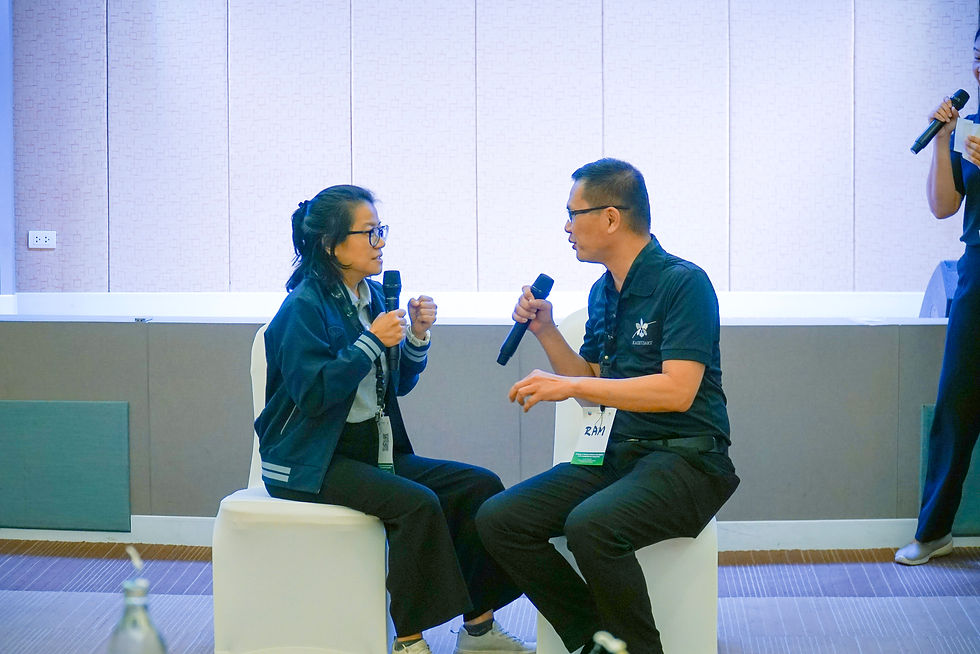
The workshop combined presentations, group discussions and practical exercises to introduce participants to the competency framework and teaching methods used in the OHCC course.
Participants worked in small interdisciplinary groups throughout the training. The first day focused on the foundations of One Health and systems thinking. The second day explored competencies related to communication, leadership, culture and ethics, and planning and management. Participants were also introduced to the OHCC e-learning platform, which provides digital learning materials and supports resource sharing among institutions.
On the final day, participants designed teaching modules that incorporate One Health competencies into their courses. Each group presented its ideas and received feedback from trainers and fellow participants.


Expanding the One Health Educator Network
The workshop trained 30 new facilitators who can introduce One Health competencies in their courses. Fifteen experienced trainers from KU and THOHUN member universities also participated as mentors and facilitators.
Participants reported greater confidence in applying the competency framework in their teaching and discussed opportunities for collaboration across institutions. The training forms part of ongoing efforts to strengthen One Health education in Thailand and expand the network of educators working across disciplines to prepare students for complex health challenges.
Photo Gallery: https://photos.seaohun.org/SEAOHUNKUTOT2026


Comments