
Turning Concepts into Classrooms

Jayson Tadeo on the two-year journey of writing the One Health lessons nowreaching classrooms across the Philippines

In September 2024, a group of 45 teachers gathered in Pampanga for a three-day training on something new: a set of lessons that treated human health, animal health, and the environment as one connected subject, not three separate ones. Behind those lessons was a small writing team from the Department of Education's Bureau of Learning Delivery, including Jayson Tadeo. Two years later, that same module has grown into a province-wide pilot in Aurora, with a fresh round of teachers trained this July. We sat down with Jayson to talk through the whole stretch, from the meeting that started it to where the project stands today.

THE JOURNEY RECAP
|

Q: Take us back to the start. How did you end up writing this module?
Jayson: I was asked to sit in a meeting with a visiting delegation from the SEAMEO TROPMED Network led by Dr. Sandra Tempongko. I came in with an open mind and a genuine curiosity about what would be discussed. When they introduced the One Health concept, I was immediately struck by its relevance. I saw how the project could help Filipino learners develop a deeper sense of responsibility toward their own health, their communities, animals, and the environment. That meeting became the starting point for everything that came after.
Q: What did writing the module actually teach you about One Health?
Jayson: Going in, I understood the basic idea: human, animal, and environmental health are connected. Writing the lessons made it concrete. One Health is not only a scientific or public health concept, it's also a way of thinking that can guide people in making responsible decisions in their daily lives. Food safety, waste management, disease prevention, farming, none of it works in isolation, and neither could the lessons.
Q: The module first went into classrooms in Pampanga back in 2024. What was the hardest part of getting it ready?
Jayson: Finding a natural way to fit it into what students already learn, at every grade level, without turning it into an extra subject bolted on the side. Younger students got lessons built around things they already know, like hygiene and animal care. Older students tackled harder territory, like disease prevention, sustainable farming, and environmental protection. There were moments I wasn't sure it was working. I questioned whether the activities were truly aligned with the learning goals, and appropriate for the learners. When that happened, I went back to basics: reread the purpose of the lesson, asked whether it actually helped a student understand and apply the idea, and revised until it did.

Q: What role did Chevron and SEAOHUN play in getting from that first Pampanga training to where the project is now?
Jayson: A direct one. The SEAMEO TROPMED Network gave our team technical guidance to keep the science accurate. Chevron and SEAOHUN funded the work itself, from the original Pampanga pilot through to this year's expansion. Without their funding support, the development and implementation of the project would not have been successful.
Q: Any feedback from those first two years that's stayed with you?
Jayson: Stories relayed back from teachers testing the module: students talking through proper handwashing, how to handle pets responsibly, why rabies prevention matters. Small conversations, but the kind that told me the lessons were landing, and worth carrying into the next phase.
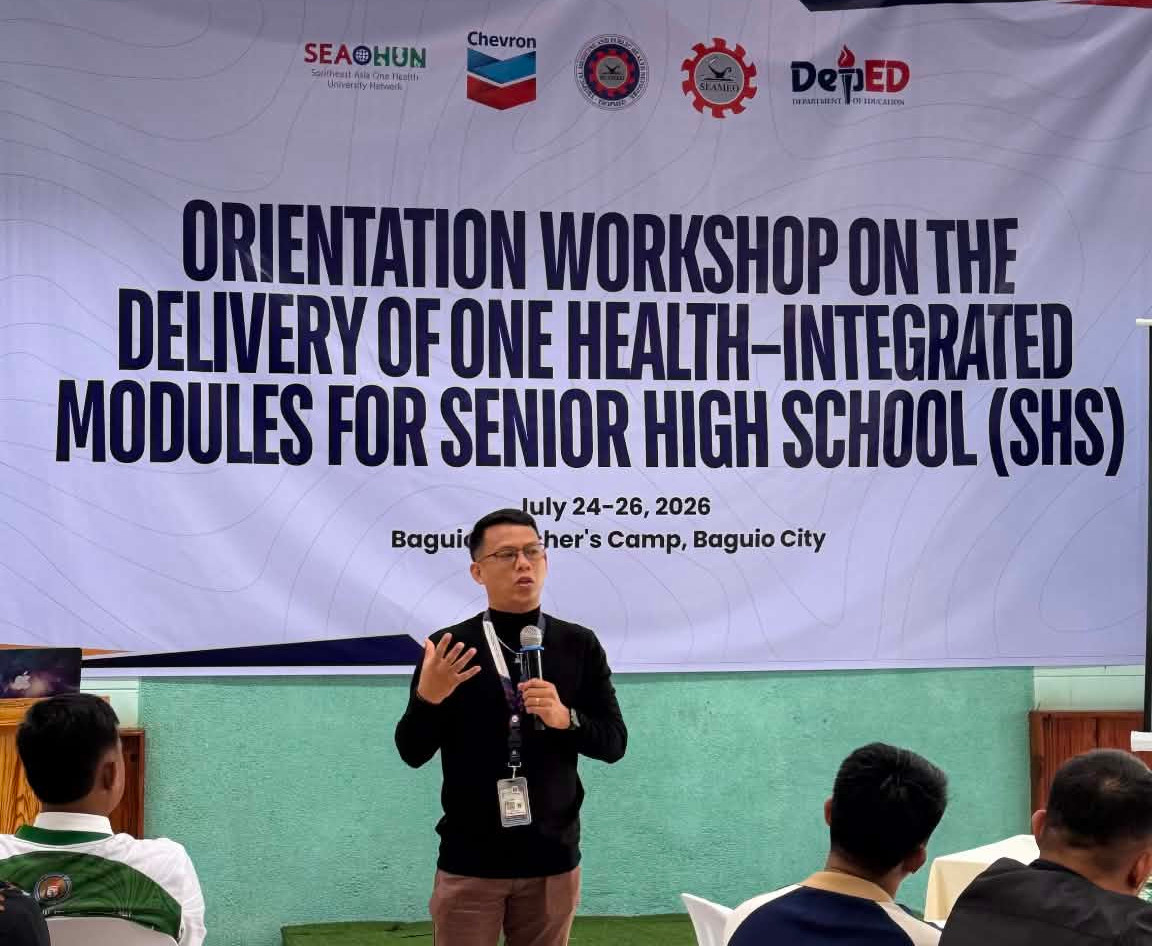
Q: Now the project has reached Aurora Province, with a new group of teachers trained this July. What was that training like?
Jayson: We always value our conversations with teachers because they allow us to understand their experiences, concerns, and expectations. For me, the training wasn't just handing over a manual. It was making sure this new group of teachers had what they needed to run with it. I want teachers to understand that the module is not simply an additional set of lessons, but a carefully designed guide, one that should help learners move beyond awareness toward practical, responsible actions in their daily lives.
Q: What do you hope students take from all this, from Pampanga to Aurora and wherever it goes next?
Jayson: What I hope students take from all of this is the realization that they can be agents of change in their own homes, schools, and communities. One health should not end with understanding the connection among people, animals, and the environment; it should inspire students to make responsible choices, influence others, and take meaningful action. From Pampanga to Aurora and wherever this initiative goes next, I hope these lessons help shape young people who see that even simple actions can create a wider and lasting impact.
“Writing this module showed me that curriculum work can go beyond the classroom. It can shape the everyday choices that protect people, animals, and the environment.” — Jayson Tadeo
Q: What's next?
Jaysaon: More schools, more provinces, and eventually, I hope, a permanent place in the national curriculum. My advice to anyone starting similar work elsewhere: root it in what's already being taught, train the teachers well, pilot it, listen to the feedback, and build real partnerships across education, health, and environment groups. The process should remain responsive to the learners' context, while ensuring that One Health becomes an integrated and sustainable part of the curriculum.


Comments